Retrieval practice: why taking quizzes helps you remember
Re-reading feels productive but fades fast. Testing yourself is one of the most reliable ways to make knowledge stick.
On this page
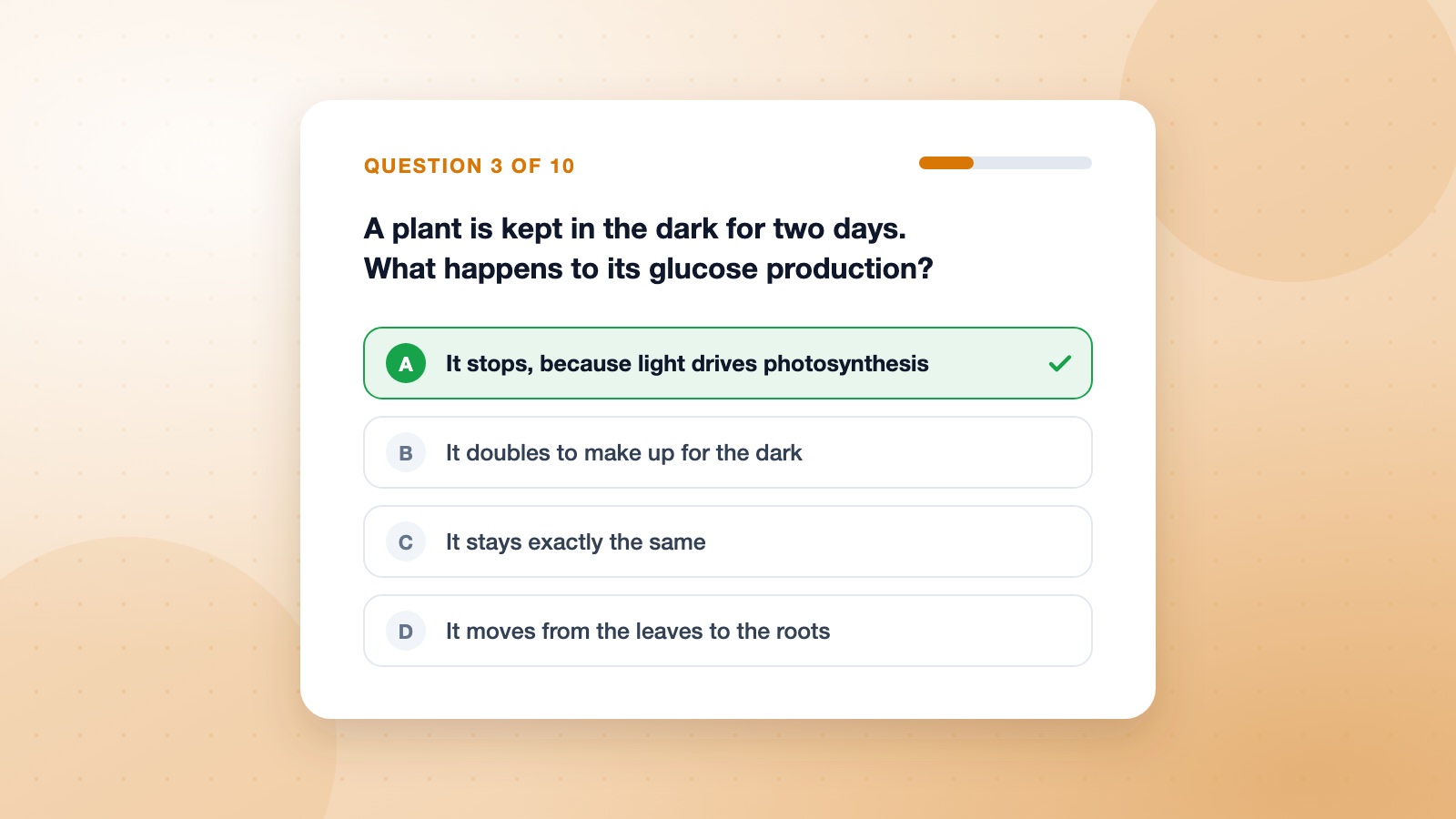
Highlighting notes and re-reading chapters feel like studying, but much of it is forgotten within days. Pulling information out of your memory, by answering questions, strengthens it far more than putting it in again.
What retrieval practice is
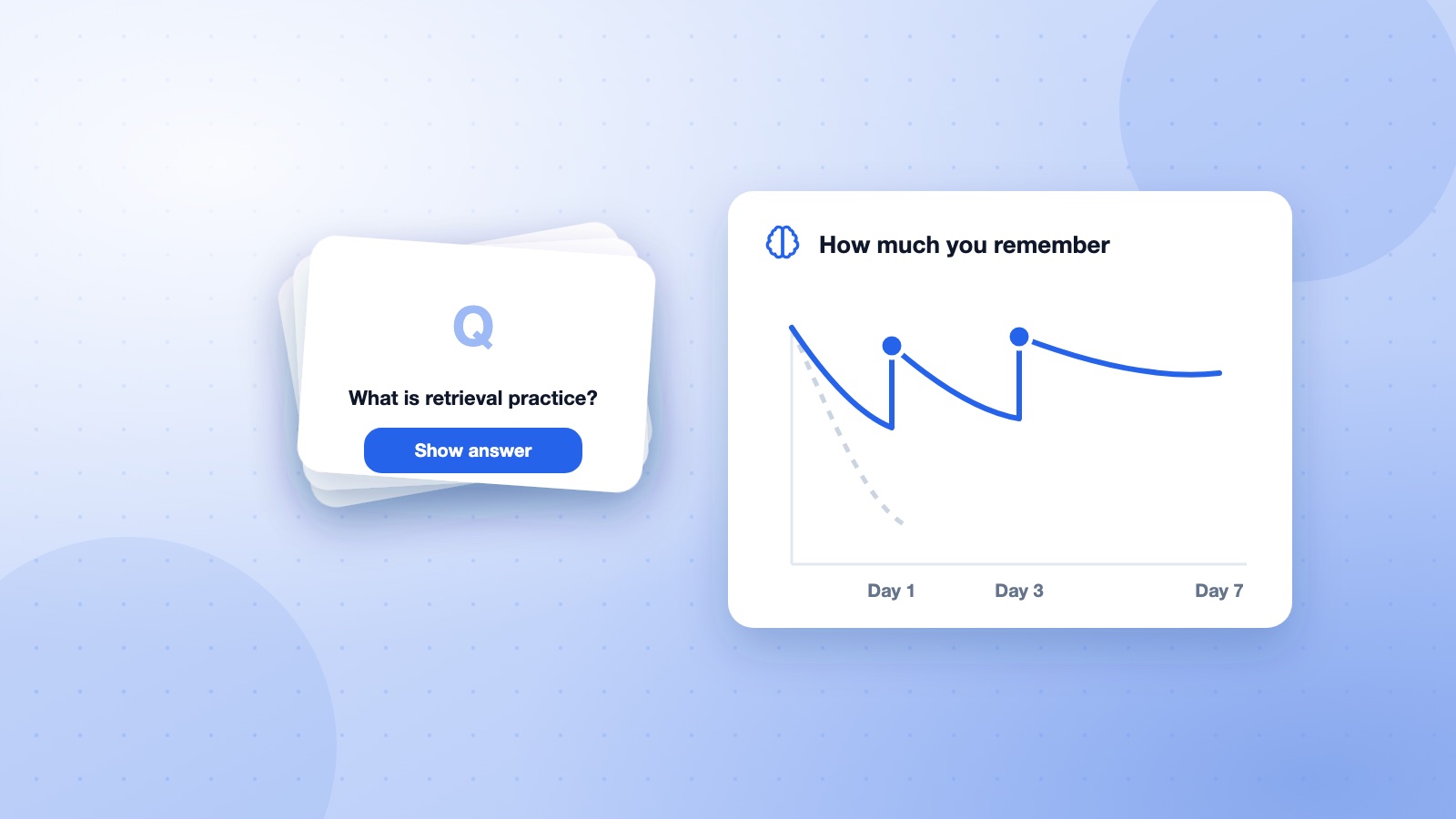
Retrieval practice simply means recalling what you've learned without looking: flashcards, practice questions, explaining a topic out loud. The effort of remembering is what makes it stick.
Space it out
Quiz yourself a day after learning something, then a few days later, then a week later. Each time it gets a little harder to forget.
Use your mistakes
- Read the explanation for every wrong answer.
- Retake missed questions a day later.
- Keep a short list of topics you keep getting wrong.
A simple weekly routine
- Learn new material early in the week.
- Take a short quiz on it the next day.
- Mix older topics into a longer quiz at the weekend.
Frequently asked questions
Is retrieval practice better than re-reading?
For long-term memory, yes. Re-reading helps you understand; testing yourself helps you remember.
How often should I take practice quizzes?
A little and often: short quizzes several times a week work better than one long session before the exam.
Does it matter if I get answers wrong?
No. Wrong answers followed by feedback are part of how learning sticks.