How to write multiple-choice questions that test real understanding
Good multiple-choice questions measure thinking, not guessing. Seven rules for clear stems, believable distractors and fair answers.
On this page
Multiple-choice questions get a bad name because many are written in a hurry. Written well, they can test understanding and application, not just recall, and they're quick to mark.
1. Ask one clear question in the stem
A student should be able to answer before reading the options. If the stem only makes sense with the answers, rewrite it as a full question.
2. Make every wrong answer believable
Distractors should be mistakes real learners make. Silly options turn a four-choice question into a two-choice guess.
- Use common misconceptions.
- Keep options similar in length and style.
- Avoid "all of the above" and "none of the above".
3. Test application, not wording
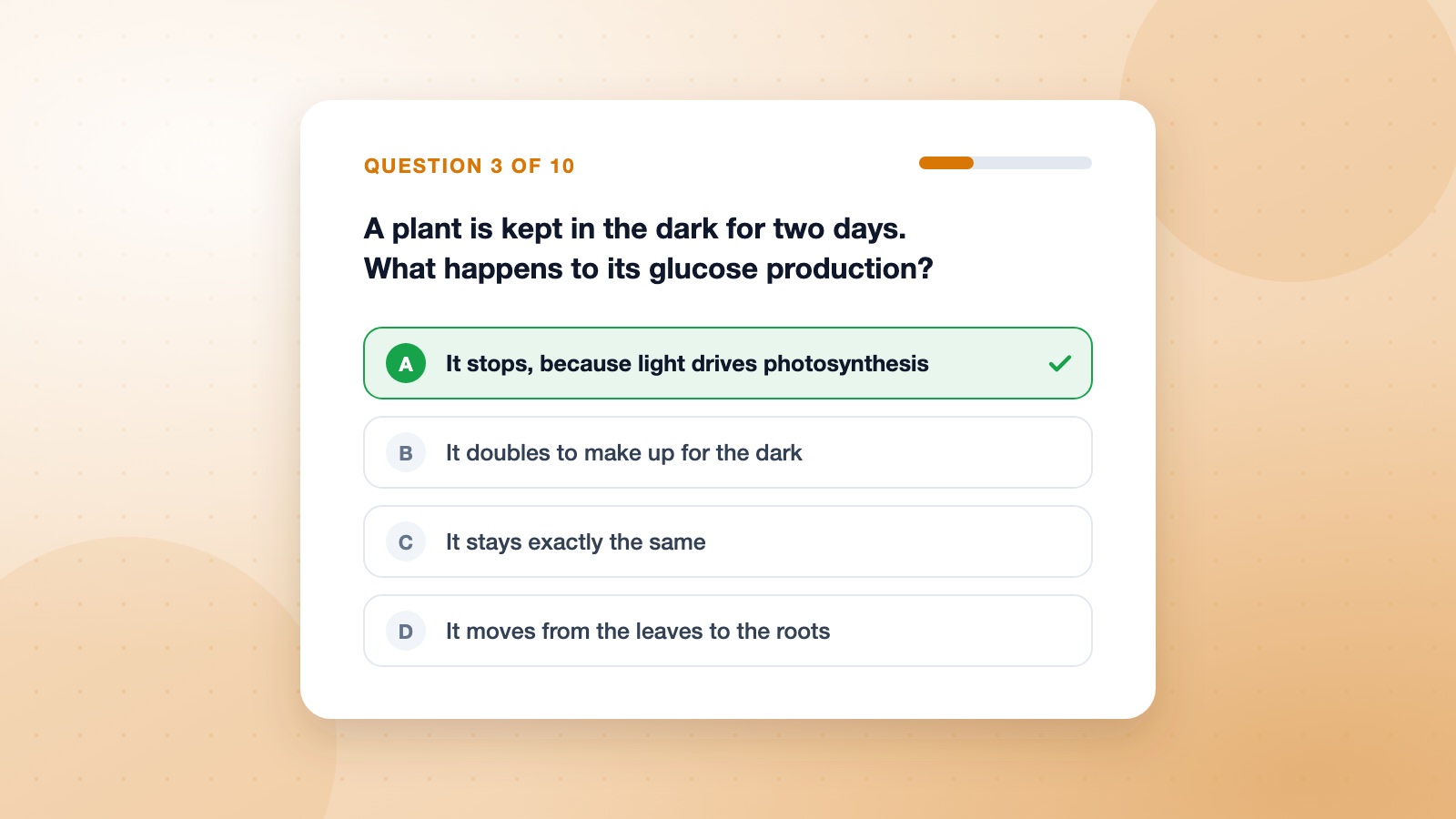
Instead of "What is the definition of X?", describe a short situation and ask what happens next or which option applies. Students who memorised a sentence won't get through on luck.
4. Keep it fair
- One answer must be clearly best.
- Avoid double negatives and trick wording.
- Randomise option order so position gives nothing away.
5. Learn from the results
After a quiz runs, look at questions most students got wrong. Either the topic needs more teaching or the question needs rewriting.
Frequently asked questions
How many options should a multiple-choice question have?
Three or four is usually best. A fifth option is rarely worth it if you can't make it believable.
Should I use negative marking?
Use it for high-stakes exams where guessing would distort results. For practice quizzes, it often discourages students from trying.
How long should a quiz be?
For practice, ten to twenty questions keeps attention. For a final exam, enough questions to cover every learning goal at least twice.